Showing posts with label french desserts. Show all posts

Monday, September 10, 2012

Be My Chouquette

We've covered the subject that eating in France is a very communal, group-type experience. 
In the United States, meetings have food as an accessory: hey, grab another donut while we discuss our turnover growth!
In France, well, food has meetings as an accessory. In the workplace, there's always some kind of occasion that justifies breakfast or a goûter. Whenever someone wants to announce a pregnancy, an engagement, or just a general happy mood, chances are they'll stroll into the office with a big bag from the local boulangerie.
If there's a breakfast get-together "just because", chances are any meetings might be delayed by a few - or 5, or 10 - minutes. I mean look, we're talking breakfast here. Flaky, buttery dough. Isn't that enough to put work aside for a while? 

Breakfast get-together food isn't just random cake. If you really want to nail an office breakfast, here's the key. Grab some mini-pastries to make everyone happy. Most of the time, half of your colleagues will reach for the pain au chocolat, or chocolate croissant. Wouldn't you?!?

A minority goes for the raisin roll - given the choice between chocolate and raisins, if you can't have Raisinets, I think you'd go for the same as I would. Now imagine what happens when there's only one of those chocolate croissants left. War?

Nope! Enter the chouquettes. 


Chou-who? Chouquettes. You've heard of the word chou, which means cabbage but is also a tender "honey"-like nickname. The chouquette is something else altogether. This chouquette here is a staple, no wait, a foundation of French breakfast get-togethers. I've made them before, you might remember. They're the most simple pastry ever, it would seem: chou pastry dough and sugar. That's it.

Easy does it, right? Now factor in how many eggs you use to achieve optimal moisture. How the sugar should be sprinkled all over, even around the edges, for the extra crispy, extra caramelized sugary taste that makes a good chouquette so special. Honestly, aside for fun, there's no real reason to make your own chouquettes at home. You can get a dozen golf ball-sized treats for 2 euros, and have the immense privilege of eating them straight from the paper bag. Which means, digging for all the little pieces of sugar that fall off, creating a mound of sugar that's just waiting for you. 


Chouquettes culturally have that special something that makes everyone enjoy them, or at least the idea of them. Cute little mounds of sugar that make everyone around smile - what's better than that? Move over, Mean Girls: chouquettes are what really gives you the cool factor during recess. (Or office breakfast, but you get the point)


Monday, August 20, 2012

A Tart Tradition

Oh, the walk in the woods the day before Christmas. The birthday cake that's become your yearly ritual...and the recurring hope when you blow the candles out that you willa ctually, someday, become a spy...Wait, what? Sorry, that was too much information.

My point being that we all have our special traditions that we link to specific seasons or times of the year. It goes far beyond the ubiquitous Thanksgiving turkey: for some, it's all about apple-picking on that special family weekend, or biting into your first lobster roll of the Summer.

I've created my own traditions of sorts, that accompanies Summer weekends in the Vosges. There's the walk in the woods, that migrated from Winter to Summer this year...


... but there's also the baking of a nice tart. Remember the tarte aux fraises?

This time around, however, there was more of a story behind it. In my last post, I mentioned a special trip to Italy, where Amalfi coast lemons and a ring were involved. The ring has, thankfully and somewhat unsurprisingly, stayed on my finger. The lemons, on the other hand, went from a little shop in the coastal town of Praiano to our fridge in Paris, to my aunt's fridge in the Vosges mountains.

These aren't your run of the mill lemons. Ooooh no. These are more like a cross between what the French call a citron (a lemon) and the english citron, or cédrat in French. They're bumpy and huge, but just one look is enough to make you want to dig your nails into them to let the fragrant oil work its magic. (Don't get me wrong, I don't dig my nails into things that often, in case you might have gotten that idea.)

Wondering whether it's really worth it to lug a bag of lemons back from a trip to the Amalfi coast? Wonder no longer! You can zest them and store the zest in sugar to add taste to anything from a muffin to yogurt. The juice is delicious on its own, too.


Or... start a tart tradition! Not the kind that's going to leave you bitter ("I never wanted that tradition in the first place!" = not the right kind of tart), but the opportunity to indulge in creamy lemon curd and a tasty crust.

If you know Bilingual Butter, you'll recognize the recipes that I used - hey, it's not called a tradition for nothing!


Lemon Tart
serves 6 to 8

for the tart crust (makes extra dough, enough for one or two tartelettes):

250g (1 cup) all-purpose flour
85g (1/3 cup) confectioner's sugar
1 egg
1/2 vanilla pod, scraped
125g (1 stick) unsalted butter, softened and cut into chunks
25g (1 3/4 TB) almond powder
4g (1 TS) salt

Beat butter with a mixer or by hand until fluffly. Add confectioner's sugar, almond powder, salt, vanilla "caviar", egg, and flour, one at a time and mixing well after each addition.

Dough should be pretty sticky but you should still be able to handle it. Roll it into a ball, flatten a little with the palm of your hand, and refrigerate for at least a few hours: overnight is fine. You can also freeze the dough.

When ready to use, preheat oven to 180°C/ 350°F.

Flatten the dough using a rolling pin until it is 3mm thick. Place in a buttered 22cm tart pan (that would be 8.66 inches precisely! 8 or 9-inch is fine). Cover the pan with parchment paper and pie weights. Bake crust for 20 minutes or until golden. Remove parchment paper and weights, and bake for another 10 minutes.

Set tart crust on a wire rack to cool.

for the lemon curd:
makes 2 1/2 cups, or enough for a French-sized tart

4 egg yolks
2 whole eggs
3/4 c. sugar
2/3 c. fresh lemon juice
8g lemon zest (approx. 1 TB)
145g (10 TB) cold butter, cut into pieces

Rub zest and sugar together.
Mix lemon juice, sugar/zest, and eggs together in a heatproof bowl. Place it over a pan of simmering water.
Cook, whisking constantly, until a thermometer reads 75°C.
Remove from heat; when temperature comes back down to 60°C, incorporate butter and mix for 5 minutes.
Cover surface with plastic wrap and set aside to let cool.

Refrigerate up to 2 weeks. When ready to use, pour into baked tart shell, bake for a little under 10 minutes for the curd to firm up, and refrigerate for at least an hour before serving.


Sunday, June 19, 2011

Mon Petit Chou, Rhubarb Edition


Americans have sweetie pie and honey. Italians have tesoro. The French have mon chou.

Chou, masculine noun: 1. cabbage 2. small, rounded, hollow pastry.

Chou is commonly employed to express the cute factor of something. "C'est chou" means that something is cute, "t'es chou" means that you're adorable, and so on. Couples refer to each other as mon chou. Yes, my cabbage. But more likely the cute, diminutive pastry that shines in its versatility.

Fill a bunch of choux (oh, the wonderful specificity of French spelling) with cream, make them into a pyramid using hardened caramel, and you've got a classic of French receptions, the pièce montée. Use your choux dough to make elongated pastries and you've got the éclair. Fill little choux with ice cream and top with hot chocolate sauce and here come the profiteroles. By means of a totally non-scientific demonstration, I have just proved that pâte à choux is basically everywhere and you can run but you can't hide. It'll get to you at some point.

A little chou is like the Beanie Baby of the pastry world (flashback to 1993!), except there's no risk of it being out of stock, so you won't have to go to all the Toys R Us of the country to find one. You can make a load of petits choux right here in your kitchen. 


Even better, be seasonal about it. Create a limited-edition chou! In this case, rhubarb and vanilla crème pâtissière come together for a fun time. You wouldn't necessarily think they would end up together, but some times these things happen and you don't see them coming. 

Slight bitterness of rhubarb + happy creaminess of vanilla pastry cream = a bite-sized dessert that's on just the right side of the sweet spectrum. 

You don't have to wait around for your chou to come into your life--you can just create it at home. Better than Edward Scissorhands.


Rhubarb Petits Choux
makes approximately 20 small choux

1/2 recipe pâte à choux (below)
1 recipe vanilla pastry cream (below)
1 c. cooked rhubarb, whirled in blender

Mix pastry cream and cooked rhubarb in a medium bowl. Place in a pastry bag fitted with a large round tip.

Pierce a small hole on the side of each chou and pipe filling inside. Refrigerate until a half hour before serving.

Eat the day of, or the next day at the latest.

Pâte à choux
120g (1 c. + 3 TB) all-purpose flour
10cl  (1/3 c. + 1.5 TB) whole milk
10cl water
10g (1 scant TB) granulated sugar
1 pinch salt
80g (5.5) butter
4 whole eggs

Bring milk + water to a boil in a saucepan.

Add butter and salt.

Sprinkle flour into saucepan, beating vigorously. On low heat, "dry" the dough out by beating it until it stops sticking to the pan. Remove from heat and add eggs one by one, mixing until well incorporated before adding the next one.


Vanilla Pastry Cream
15g (1 TB) cornstarch
40g (3 scant TB) granulated sugar
18cl (3/4 cups) whole milk
2 egg yolks
18g unsalted butter (1 1/4 TB), room temperature
1 vanilla pod, scraped (or use what you have left from the crust recipe)

Bring milk and vanilla to a boil in a medium saucepan, and remove from heat. Add cornstarch and half of the sugar.

In a small bowl, beat yolks and remaining sugar until lightened in color, about 3 minutes. Add a little of the milk beat to combine.

Place egg mixture in saucepan; beat regularly on medium-high heat. Bring to a boil and remove from heat.

Keep beating until pastry cream achieves a thick but silky consistency. When the cream reaches 50°C / 120°F , add butter and keep beating until incorporated.

Let cool.

Saturday, June 11, 2011

Cherry Cherry Boom Boom

Alright, yes, I am happy to admit that I enjoy listening to some Lady Gaga at times. But then again, don't we all? 

Wait, what? You don't? Oh ok. (I know you're just pretending, and you secretly want to learn the full choreography to Judas. But I won't tell anyone.) 

I may like Lady Gaga, but I'm pretty sure I was randomly referring to cherries in my sentences long before she was. 


When I was young, I would pretend like every other little girl that pairs of cherries were actually earrings, putting them around my ears and letting them dangle like I was the trendiest girl in town. I grew up a little, and put the cherries down. I couldn't seemingly live without cherries in my life, however, so I proceeded to wear shirts with cherries and draw cherries everywhere. If I had found a keychain with cherries on it, you can bet it would have been added to my collection. 

Don't even get me started on artificially-scented and flavored cherry items. Pencils, lip balms... you name it, I loved it.

Now that all I have left from that obsession is a "freshly picked cherries"-scented candle, and actual cherry season is in full swing here in France, I can get down to serious business. I.e., baking. With cherries. Namely, cherries from my uncle's garden in Saint Dié. 

Cherry clafoutis is a classic French dessert--for those unfamiliar with it, it's pretty much a baked custard, usually served family-style in a large dish. Cherries are the traditional fruit of choice for a clafoutis: the sweet tartness of the fruit is perfectly balanced by the creamy custard, making it a light and simple dessert for many occasions.


There are a lot of ways to prepare a clafoutis, the tastiest ones including the addition of cream. For the one I made last week, skim milk was what I used in an attempt to pretend like I'm "watching what I eat". "Attempt". Although skim milk isn't cream, surely, it makes for a darn good clafoutis. 
Another subject that truly divides the masses here in France is whether or not to pit the cherries. If you do, it'll make the clafoutis easier to eat, but you'll lose the juice. Unpitted cherries may be a hassle when you're chomping down on your share of dessert, but nothing beats a juicy cherry, so go for it. 

So good you'll feel like singing Pokerface with cherry earrings--and that's something to thank Gaga for, too.


Cherry Clafoutis
serves 6

1 lb. cherries, washed and stems removed
3 eggs
1/2 c. granulated sugar
1 1/4 c. all-purpose flour
pinch salt
1 1/4 c. milk

Place cherries in a bowl and mix in with half of the sugar. Let sit for at least 30 minutes.

Preheat oven to 350°F/180°C. Butter a round 10-inch pan or equivalent, or 6 individual dishes.

Beat eggs in a medium bowl and set aside. Sift flour and add sugar and salt. Incorporate eggs and mix. Add milk and mix until homogenous.

Place cherries in pan and pour custard on top. Bake for 35 to 40 minutes until golden. Cool in pan and place in refrigerator. Serve cool or cold.

Monday, March 14, 2011

Slather It On

Americans have peanut butter slathered on bread, on a banana, or on a branch of celery: it shines by its versatility.

It can be salty, sweet, or both. It can be crunchy, it can be smooth. Best of all, it's even (somewhat) good for the human body. Peanuts pack a lot of protein, I hear, making good old PB a guilty pleasure in disguise.

In many European countries, peanut butter is seen as one of two things. Either it comes across as an American novelty sold next to Newman's Own popcorn and barbecue sauce, or it is consumed as a staple in Asian and African cooking. Whatever way you look at it, peanut butter doesn't come near the tabletop when it's time for the four o'clock goûter.


That isn't to say that children don't spread anything on their tartine besides butter and jam--which, if you ask me, is already heavenly enough. Specialty spreads are making it big these days in the Old World, and I'm staying around to get a piece of the action.

One of them doesn't need an introduction: you all know Nutella. Loved by kids and teenage girls alike, it comes in multiple sizes, hoarding a substantial chunk of the grocery store aisle. The chocolate-hazelnut combination is hard to resist, and there are many great artisan versions made with milk or dark chocolate.
Nutella isn't the only one out there, though. New spreads are trying to get "leur part du gâteau" and secure a spot in family cupboards. New addictions may just see the day sometime soon.


Staying in the realm of chocolate, remember Ovaltine? Called Ovomaltine in French-speaking Europe, the chocolate malt powder is very polarizing: you either love it or hate it. For those who enjoy it, take chocolate, malted milk powder, and imagine them turned into a paste. A paste with crunchy, malted chocolate bits. Enough said, right? Slathered on a large slice of fresh rustic bread, it becomes phenomenal and complex--this isn't just for the K-12.

Another paste has been making the rounds lately. Speculoos, the traditional Northern European spiced cookie, has become the object of a media frenzy, judging from a recent New York Times article. Lotus, the famous speculoos brand, has started producing and selling speculoos spread based on a winning recipe from a consumer contest. If you're lucky, your European grocery store will stock both versions, à la peanut butter: crunchy and smooth. 

Speculoos paste is exciting for its taste, but also its versatility. Let's take a look at flavors first. If you've ever bitten into a speculoos cookie, you're probably familiar with the warmth the crisp, buttery treat exudes. Cinnamon is the dominating spice, with a cast of characters that would make any gingerbread swoon: star anise, cloves, ginger and nutmeg, to name a few.The spread, surprisingly enough, is an amazing way to highlight this warmth: a spoonfull of the smooth version is silky, as buttery as the cookie, and really lets the medley of flavors shine through. 


That same spoonful should also be enough to evoke a flurry of dishes where speculoos paste would be right at home. On the sweet side, it goes without saying that any kind of bread would be happy to have speculoos spread as a snack-time date. Thinking a little further, it could easily be incorporated into a mousse preparation, or slathered onto ladyfingers for a new take on classic tiramisu. When it's time for dinner, keep the jar by your side: it could easily turn a coconut-shrimp curry into a culinary prowess. One paste, a million ideas--this is no gadget. Word out there is Galak, a white chocolate sub-brand of Nestlé, is launching a white chocolate-speculoos paste of its own. Visions of spoonfuls making their way onto fresh baguette are budding in European minds everywhere...could Nutella be in danger?

Not for now, it seems. European children will always love a four o'clock snack, and the snack, in turn, seems to have a thing for spreads. Looks like we're going to need larger cupboards.


Monday, February 28, 2011

Pear and Amandine Tart


January in France marks the month where everyone is entitled to indulge in the traditional Galette des Rois for thirty days straight (or only one, whatever suits them). Essentially, it is a buttery and flaky pastry crust filled with buttery almond cream. Yes, buttery describes it, and so does delicious. 

After January, you'd think we've had our fair share of creamy almond filling, right?

Think again! Almond cream is quite a versatile creature, transforming itself like a cameleon each time it is paired with a new ingredient. Besides the French king cake, crème amandine has another best friend: pears. Pear and almond tart is a staple in French baking, appropriate for an elegant dinner or a casual afternoon snack--and any excuse for an afternoon snack is a good one in my book.

Setting out to keep almond cream in everyone's mind for the month of February, too, Eleni (you might remember her from our chocolate macaron experiment) and I had dreams of eating a whole pear and almond tart one afternoon. To switch things up, we tried a new tart crust recipe, and kept the rest classic with a cream recipe from Ladurée and Eleni's signature raspberry poached pears.

The dough, well... the dough didn't really live up to our expectations. It was rather crumbly, with an overpowering nuttiness that was distracting and didn't let the pears and almond shine like they should. The rest, however, was pretty amazing. The poached pears were perfectly melt-in-your-mouth, and the almond filling is a great pairing.

As tempting as it may seem, wait until the tart really cools down to get your first bite: we couldn't wait and were disappointed by the first results. Good things come to those who wait... An hour or two later, however, and it was just as good as we could have imagined.

Maybe even worth making all February (or for the day that's left, at least). What's next for March--almond cream turnovers? We'll see...

Pear and Amandine Tart
serves eight

Preheat oven to 350°F / 180°C.

for the crust, to be prepared a few hours before baking: recipe here (this is not the recipe we used, but would work out much better and be great with the rest of the ingredients)

Once tart dough is ready to be baked, bake with parchment paper and pie weights until edges of the crust are golden, approximately 20 minutes. Remove from oven and let cool.  

for the pears, courtesy of Eleni:
2 large pears (we used the Conference variety and they held up great)
1 c. raspberry liqueur
1 TS lemon juice
2 TS sugar (adjust to the level of sweetness you want)
1/2 TS cinnamon
1/2 TS vanilla
a few drops of almond extract
If you want to make the flavors more subdued, i.e. for a tart like this,  add a little water (1-2 TB).

Bring all ingredients except pears to a simmer.

Peel, cut in half, and core pears. Place flat side down in liquid and cook, spooning mixture on top of pears regularly, until softened yet still firm (a knife inserted into the center of a pear will be a good indicator) for the needs of the tart.

Remove from heat, and when cool enough to handle, slice pears. Set aside to place on filling.

for the filling:
1 c. + 3 TB ground almonds
7 TB butter, softened
3/4 c. confectioner's sugar
1 TB cornstarch
2 eggs
1 TB rhum (optional, we didn't use it)

With a wooden spatula, mix softened butter, confectioner's sugar, almond flour. and cornstarch one by one. Add eggs and rhum (if using) and mix thoroughly.

Note: prepare the filling as late as possible, ideally right before baking it for a lighter texture.

Pour filling into tart shell, spread until level. Arrange pears on top of filling in a rose pattern.

Bake until top of the tart is golden, approximately 30 minutes. Let cool before serving.


Friday, February 18, 2011

It's Moka, not Mocha


Let's be clear from the start: I am not a coffee drinker. You won't see me sipping an artisan drip coffee in a cool-looking place; I don't even have the necessary utensils or ingredients to make coffee at home.

Somehow, that never stopped me from loving coffee ice cream when I was a lot younger. I then replaced it in my heart with straciatella, but I knew coffee would show up somewhere again.

One day, Moonstruck Café came along. Moonstruck was right smack in the middle of the University campus: the place cool people went to, or at least that's what my fourteen year-old self thought at the time. As University Laboratory High School students, we weren't very far away from Moonstruck and its dark blue décor. When we first walked in, I could have opted for hot chocolate, but I went for the mocha. Hey, that's what college kids drink, right? It has coffee! Well, a little bit of coffee and a lot of milk and chocolate, but that's beside the point. Fourteen year-old Lucie was more than happy to be drinking a "specialty coffee beverage" in a coffee shop, long before Starbucks became the ubiquitous chain it is today. Moonstruck made me the cool and confident person I am today. Maybe.

Nowadays, a frozen yogurt shop has replaced Moonstruck, but that's okay. I still like mocha, do not enjoy coffee, but have a renewed taste for coffee-flavored sweet things.


Jacues Pépin's Moka is just one of those cakes: coffee buttercream meets a silky dacquoise cake base. A mocha it is not: this moka has no chocolate, and that's not a bad thing. Coffee is the star, yet doesn't come across as overpowering. This is the type of dessert that can be easily appreciated by anyone. 

Even fourteen year-old teenagers who don't like coffee...but can't refuse a mocha. Or moka, in this case.

Moka
recipe adapted from Jacques Pépin
serves 12

3/4 c. strong coffee
for buttercream:
1/2 c. coffee
1/3 c. granulated sugar
3 egg yolks
3 sticks (1.5 cups) butter, softened

for hazelnut meringue:
1.5 c. ground hazelnuts
2 TB cornstarch
3/4 c. granulated sugar
7 egg whites

for rhum whipped cream:
1.5 c. heavy cream, very cold
2 TB granulated sugar
1 TB rhum

1.5 cups slivered almonds, for garnish

Bring coffee to a boil and reduce until you get 1/2 cup.

Prepare buttercream: bring coffee and sugar to a boil, two to three minutes, until syrup becomes sticky.
In a stand mixer, beat yolks together, slowly pour in syrup, and continue beating for approximately ten minutes. The mixture should quadruple in volume and be very creamy. Add butter, cut into chunks, until you obtain a smooth buttercream. Set aside.

Prepare hazelnut meringue: Preheat oven to 350°F / 180°C.

In a medium bowl, mix ground hazelnuts, cornstarch, and sugar.

Beat egg whites to stiff peaks, and delicately incorporate hazelnut mixture.

On a parchment-lined baking sheet, spread mixture evenly and bake until golden, approximately 20 minutes. Remove from baking sheet to cool. Once meringue is cool, cut into 2 rectangles of equal dimensions. Place one rectangle on an foil-covered piece of cardboard.

Cover with a very thin layer of buttercream. Next, place a third of buttercream mixture in a pastry bag and pipe onto the perimeter of the meringue, tracing an extra line along the middle (like the line in the center of a soccer field). 

Make whipped cream: Beat cream, rhum, and sugar to stiff peaks.

Pipe whipped cream into the two empty rectangles on meringue. Place remaining layer of meringue on top and frost with remaining buttercream on the top and sides.

Toast slivered almonds on the stovetop until golden and fragrant. Let cool, and garnish cake. 
Refrigerate before serving.

Note: Although the cake layers are called a meringue, the consistency is more that of a dacquoise, and should be moist and soft.

Tuesday, December 28, 2010

It's Beginning to Look A Lot Like Post-Christmas


What will you be doing on December 28th?

I've been spending a good part of my day throwing furtive glances around me. As I write this, I have one hand digging into a box of quince candied fruit squares (called pâte de fruit in France) because I just couldn't stand thinking about them anymore.

In front of me are three bowls. One is filled with lychees, and the other two are piled high with chocolate. If I round the corner near the fireplace, I head towards the cookie box. The kitchen is the riskiest zone in the house. You'll wish you were Shiva and had many more hands than you do now, just so you could dig into the box of candied chestnuts, the gingerbread house, caramel marshmallows, and a giant Toblerone all at once. I guess maybe I should put multiple arms on my Christmas list for next year.

Now, let's imagine you wanted to get a little work out by climbing up the stairs. Watch out! In my room are the contents of my Christmas stocking...more chocolate.

Some would say I'm living in paradise, and I pretty much agree. I must be dreaming, though. I think I need an extra chocolate just to make sure this is all real. Then again, my friends, this is Post-Christmas: time to eat vegetables, limit yourself to five chocolates a day, and stop putting your Christmas presents into piles just to look at them over and over again.

Who am I kidding? I do that with my Christmas presents all year long. I hope you had a wonderful holiday; I know I sure did. The days after Christmas make some people sad, but the only reason I can think of is that there's no more chocolate yule log left.


In France, the chocolate bûche is a classic--and usually my Maman's thing. I was always a big eater of bûche, but never tried my hand at making one until this year. And since I would rather eat something good than completely failed on Christmas day, I only did half of the work and teamed up with my Maman for the rest.

This would make a great dessert all throughout the holiday season, so if you're looking for a beautiful way to end a meal, give this recipe by the esteemed Jacques Pépin a try. It's tasty and light, so you'll be able to polish off the bowl of chocolates afterwards.

Sounds like a plan I would stick to.

Chocolate Yule Log
from The Art of Cooking by Jacques Pépin
serves 10 to 12


for Jelly Roll Cake:
8 eggs, separated
2/3 c. granulated sugar
1 TS vanilla
2/3 c. flour

for Chocolate Pastry Cream Filling:
3 egg yolks
1/3 c. granulted sugar
2 TB cornstarch
1 TS vanilla
1 1/2 c. milk
5 oz. bittersweet or semi-sweet chocolate, broken into pieces

for Rum-Chocolate Ganache:
4 oz. bittersweet or semi-sweet chocolate
1/2 c. heavy cream
1 TB dark rum

for Decorations (optional):
1/2 tube marzipan
food coloring

Make Jelly Roll Cake: Preheat oven to 350°F / 180°C.

Beat 8 egg yolks, 2/3 c. sugar and vanilla together until very fluffy and smooth, approximately 1 minute. Add flour and whisk until smooth.

Beat egg whites until firm. Fold yolk mixture gently into whites.

Butter a parchment paper-lined jelly roll pan (12 x 16 in). Spread cake batter evenly on top.

Bake for approximately 15 minutes. Cake will deflate as it cools.

Make Pastry Cream: Beat egg yolks, sugar, cornstarch and vanilla together.

Meanwhile, bring milk to a boil. Pour boiling milk into yolk mixture, whisk, and return to saucepan. Bring to a boil, whisking constantly, and boil for about 10 seconds. remove from heat.

Add chocolate and stir gently until chocolate is melted and evenly distributed. Transfer to a bowl, cover and refrigerate.

Assembly: When the pastry cream is cold, spread it on top of the cake (with parchment paper still underneath cake). Lift up the cake using the paper and roll it on itself. Wrap in parchment paper and refrigerate overnight or up to one day.

Finish Log: Cut off both ends at an angle--these ends will be used to make the "stumps" on top of the log.

Make ganache: Melt chocolate in a double boiler. Place cream and rum in a bowl and pour melted chocolate on top. Whisk for 15 to 30 seconds until mixture lightens slightly in color. Do not overwhisk, which would cause discoloration and hardening of the ganache. 

Coat cake with a small layer of ganache. Place "stumps" on top. Continue coating with ganache and using a fork, create a bark effect.

Optional: Using marzipan and food coloring, make marzipan leaves and mushrooms to place on log.

Refrigerate until serving. 


Sunday, November 7, 2010

Tarte Tatin


I've been trying to imagine how someone who has never heard the name "Tarte Tatin" would go about pronouncing it if he or she saw it written somewhere. 

Let's say you're American. Would it be pronounced tar-tee tay-tin? I sometimes feel like going into a restaurant and ordering one with that pronunciation, just to watch the surrounding reactions. Acting funny (if the word stupid is coming to mind, trust me, you're on the wrong path here...maybe) in restaurants is a family thing, I guess. My dad and I have a long-standing tradition of getting a gyro on Saturdays for lunch, and they ask you for your name at the counter. Let's just say that my dad has been a great number of actors and politicians throughout the years for the gyros staff. Oh, and did I mention they call out your name so you can go pick up your order? I must be a weird kid, because I'm twenty three and it still makes me laugh.

If you're not the type to laugh at embarrassing situations in public, you've got two solutions regarding tarte tatin. Actually, three: the first would be never to have tarte tatin in your whole life (and you'd be missing out). The second would be to know that tarte tatin is pronounced "tart tah-tan", or pretty close to that. The third way to go would be to make your own, so you never have to say it out loud. And, you can eat as much as you want. As you can guess, I like the third option.


So what is tarte tatin, exactly? Apples are baked in a skillet with a lot of delicious salted butter caramel, covered with a thick sheet of puff pastry, and placed in the oven to become golden and delicious. That's pretty much all you need to know. And for those of you cringing at the thought of making your own puff pastry, store-bought is fine as long as it's thick enough (otherwise, use two sheets) and made with real butter. For those living in France, the best way to go if you're in a hurry is probably to convince your baker to sell you a block.

And for the record, hearing "apple pie" pronounced by a non-English speaker is pretty nice too. I've heard "a-pell pee"...something worth trying on my next trip to the US.


Tarte Tatin
serves 6 to 8

10 medium baking apples, peeled, cored and halved
7 TB salted butter, cut into pieces
1/2 c. + 2 TB sugar
1 thick sheet puff pastry (thawed if buying frozen)

Heat an oven-proof skillet over medium-high heat. Sprinkle sugar into skillet and let it melt until you have an amber-colored caramel, stirring as needed. Add butter and whisk well until melted and homogenous. Remove from heat.

Arrange apple halves in skillet so that they stack up against one another like falling dominos.  Cook over medium-high heat until apples are soft, about 30 minutes. Remove from heat and let cool.

Preheat oven to 350°F / 180°C. Cut a thick sheet of puff pastry (or stack two sheets if using a thin version) the size of the skillet. Cover apples and "tuck" the edges of the puff pastry in.

Bake 30 minutes or until puff pastry is nice and golden. Let cool in skillet before inverting onto a plate.

Can be served warm or cool, with cream or a scoop of vanilla ice cream.

Thursday, October 28, 2010

A Financial Situation


Technology is a great thing.

It used to be that to know how much money was left on your account, you had to keep track of what you spent in a little notebook. It has its appeal: every time you spend money, you have to write it down and remind yourself of why you bought it. Or remind yourself of why you really didn't need it.

Now, all you have to do is click on a link that lets you see exactly how much you spent, when, and where. You can spend money and forget about it until the next time you go online! (Rest assured, I don't really do that, and yes, this is a message for my parents.)

However, there's one item in the financial wor(l)d that stays the same with or without technology. I'm talking about the financier. In fact, it gets better: take a classic financier (like the one right here), switch up a couple ingredients, and you've got an altogether different version that still tastes amazing.


It's soft, buttery, and it melts in your mouth: ladies and gentlemen, I'm proud to introduce the pistachio financier. Baked in a mini muffin pan, they become bite-sized cakes that you can't really resist. If you look at the picture above, you could even pretend they're pears and therefore absolutely good for you. The pistachio taste is actually pretty faint and the almonds tend to take the lead, but the two blend together in a really pleasant way.

Or, you could take them for what they're worth: a great bribe. 

They're green like dollar bills (handy!), and who said the world of finance never involved a little bribing here and there?

Pistachio Financiers
makes 24 mini financiers

1/2 c. butter, melted and cooled
1/3 c. confectioner's sugar
1/2 c; all-purpose flour
1/3 c. ground pistachios
3/4 c. ground almonds
1 TS baking powder
4 egg whites

In a large bowl, whisk sugar, flour, pistachios, almonds, and baking powder together.

Add egg whites one by one and stir delicately. Add melted butter and mix. Place batter in an airtight container and refrigerate anywhere from 12 hours to 3 days.

When ready to bake, preheat oven to 410°F/210°C.

Grease a mini-muffin pan or mini financier pan. Fill with batter (3/4 of the way up) and bake 6 to 8 minutes until golden.

Let cool slightly in pan and invert onto a wire rack to cool completely.

Financiers are best eaten the day they are made but can be kept up to two days in an airtight container.

Sunday, October 24, 2010

Flan: A Hidden Treasure


When you peer into the window of a traditional French bakery, you may feel a little overwhelmed.

So many individual cakes to choose from, not to mention an impressive array of pastries ranging from a chocolate éclair to a tasty chausson aux pommes. Usually, though, you might have a precise idea of what it is exactly you're in the mood for. I've been known to think of a pain au chocolat for a few hours until I could actually go out, walk (alright, walk very fast...and maybe even run) to the nearest boulangerie and grab a warm, buttery rectangle of happiness. In that case, you don't really see what else is in the window because you just don't really care.

For the times when you do look in the window, however, there's a classic that often goes unnoticed: the flan. Also called flan pâtissier or flan parisien, it's a pastry crust filled with a sweet egg custard that bakes into a beautiful, dense yet creamy dessert. Flan is sold in large slices, and I can understand that a slice of yellow custard may not seem amazing next to a pistachio-green religieuse for some. Many of my friends aren't huge fans of the taste of flan, either--it's easy to have a bad experience with an altogether too sweet and too "eggy" supermarket version.

 Rustic and delicious.

As for me, I was completely unopinionated about flan until last summer, when my Maman made Pierre Hermé's water-based version. It was delicious and made me add flan to my (very long) list of desserts I could eat all day long, but it was also quite time consuming. When I came across pastry chef Christophe Michalak's quick and easy version of a crust-less flan, I had to give it a try.

You might miss the pastry crust, but the flan is definitely a keeper. It comes together quickly and doesn't disappoint: the texture is just dense enough, without becoming rubbery. The distinct creamy taste is present but doesn't overwhelm. 

Try it out, just this once. You might never look at that lonely slice of flan the same again.


Crust-less Flan
adapted from Christophe Michalak
serves 6

2 c. milk (any kind will work but whole yields a richer custard)
1 c. heavy cream
5 egg yolks
1/2 c. + 1 TB granulated sugar
1/3 c. cornstarch
1 TS vanilla extract

Butter and flour an 8-inch pastry circle or 6 individual pastry circles (if you don't have these, you can use a cake pan but you may have a harder time removing the flan).

Bring milk and cream to a boil in a heavy-bottomed saucepan over high heat.

In a medium bowl, beat egg yolks, sugar and cornstarch. Pour in boiling milk and cream, mix, and place mixture in saucepan. Cook for another 30 seconds after it starts to boil again. 

Place custard in a shallow baking dish and cover with plastic wrap, pressing it against the custard. Refrigerate until cool.

Preheat oven to 350°F / 180°C.

Place pastry circle(s) on a baking sheet covered with a baking mat or parchment paper. Remove custard from the fridge, whisk, and pour into pastry circle; smooth top. Bake for approximately 45 minutes, or until top is very golden. 

Cool and remove pastry circle. Serve cold. This flan can be kept in the refrigerator, covered, for up to two days.

Thursday, October 7, 2010

Happy Birthday, French Style


How do you imagine your perfect birthday cake?

Is it a mountain of yellow cake smeared with billowy buttercream, or something more along the lines of a dark chocolate tart?

Maybe it's easier to start along the lines of what someone woudln't want in a birthday cake. Take my sister, for example. She wouldn't want ginger in her cake, no way. Cooked fruit wouldn't really make her very happy either. As for orange blossom, well, she's allergic to it.

This is why my sister's birthday cake had orange blossom mousse. No joke. Obviously, I wasn't planning a remake of a Roman tragedy: my sister falling over in the middle of a restaurant clearly wasn't my goal. I wanted her to fall over, sure, but in surprise, joy and excitement over the fact that it was her birthday and she was spending it in Paris. So let's make something clear: she's mildly allergic to orange blossom, but loves it. And what my sister loves, I do. (Aww.)

A french party cake isn't usually a butter or oil cake like you find in the United States. In France it's all about the génoise. Genoise is a sponge cake, made mostly with eggs and hardly any butter. The result is light and airy, and filled with mousse, it becomes a great dessert for any occasion. Frost it with almond dark chocolate ganache, and then, you've got yourself a proper birthday cake.

What better way to celebrate a birthday in France than a French birthday cake? Having it sliced, plated and served in a restaurant probably belongs on that list--but maybe I was the one falling over at that point.

After her allergy headache went away, my sister's verdict was that this was quite a tasty cake. For anyone who enjoys orange blossom and almonds (allergies or not, but watch out though), this cake is a great way to have the two flavors meld together without being overwhelming.

And since I didn't do enough overwhelming with the cake, I'll be overwhelming in my extension of what a "birthday weekend" really is. It's already Thursday, six whole days later, but that's alright:

Happy Birthday, Biquetta!


Génoise
makes one 9-inch cake

4 eggs, separated
1c. + 2 TB granulated sugar
1 1/4 c. all-purpose flour
2 1/2 TS baking powder

Preheat oven to 350°F/180°C.

Butter and flour a 9-inch cake pan.

In a medium bowl, mix flour and baking powder.

Beat egg whites to stiff peaks in a stand mixer or with a handheld mixer. Add sugar and keep beating at medium speed. Decrease speed, add egg yolks all at once, followed by flour mixture.

Beat until just incorporated and immediately pour into cake pan. Bake until golden and a knife inserted in the center comes out clean, 20 to 30 minutes.

Let cool in pan. Serve the same day or the next. The génoise can also be frozen if well-wrapped.

To assemble cake: cut génoise in half and spread mousse between layers. Cover with ganache frosting and decorate with toasted almonds.

Orange Blossom Mousse
makes 500g mousse, more than enough to fill a 9-inch cake


6.5 TB water
1 1/2 TB orange blossom water
1 TB powdered gelatin
1 1/2 c. Italian Meringue (recipe follows)
1 3/4 c. whipped cream

for Italian Meringue:
3 egg whites
1/4 c. water
1 3/4 c. + 1.5 TB granulated sugar
Boil water and sugar until mixture reaches 240°F on a candy thermometer.

Beat egg whites to soft peaks on high speed. reduce speed to medium and add syrup. Beat until mixture cools slightly.

for Mousse:

Heat water, orange blossom water and powdered gelatin until dissolved.

Delicately mix Italian meringue and whipped cream. Add water/gelatin mixture and combine. Use immediately or refrigerate up to one day before using.


Dark Chocolate Almond Ganache
makes enough to frost a 9-inch cake

7 oz. dark chocolate, chopped
1 c. heavy cream
1 TS almond extract

Place chopped chocolate in the bowl of a food processor.

Scald heavy cream until bubbles appear at the sides of the saucepan.

Pour cream  and almond extract over chopped chocolate and process for approximately one minute until smooth. Pour into a dish and refrigerate, stirring every hour, for several hours or until you reach desired consistency.

Frost cake immediately, or refrigerate ganache until ready to use. Bring to room temperature before using.

Saturday, October 2, 2010

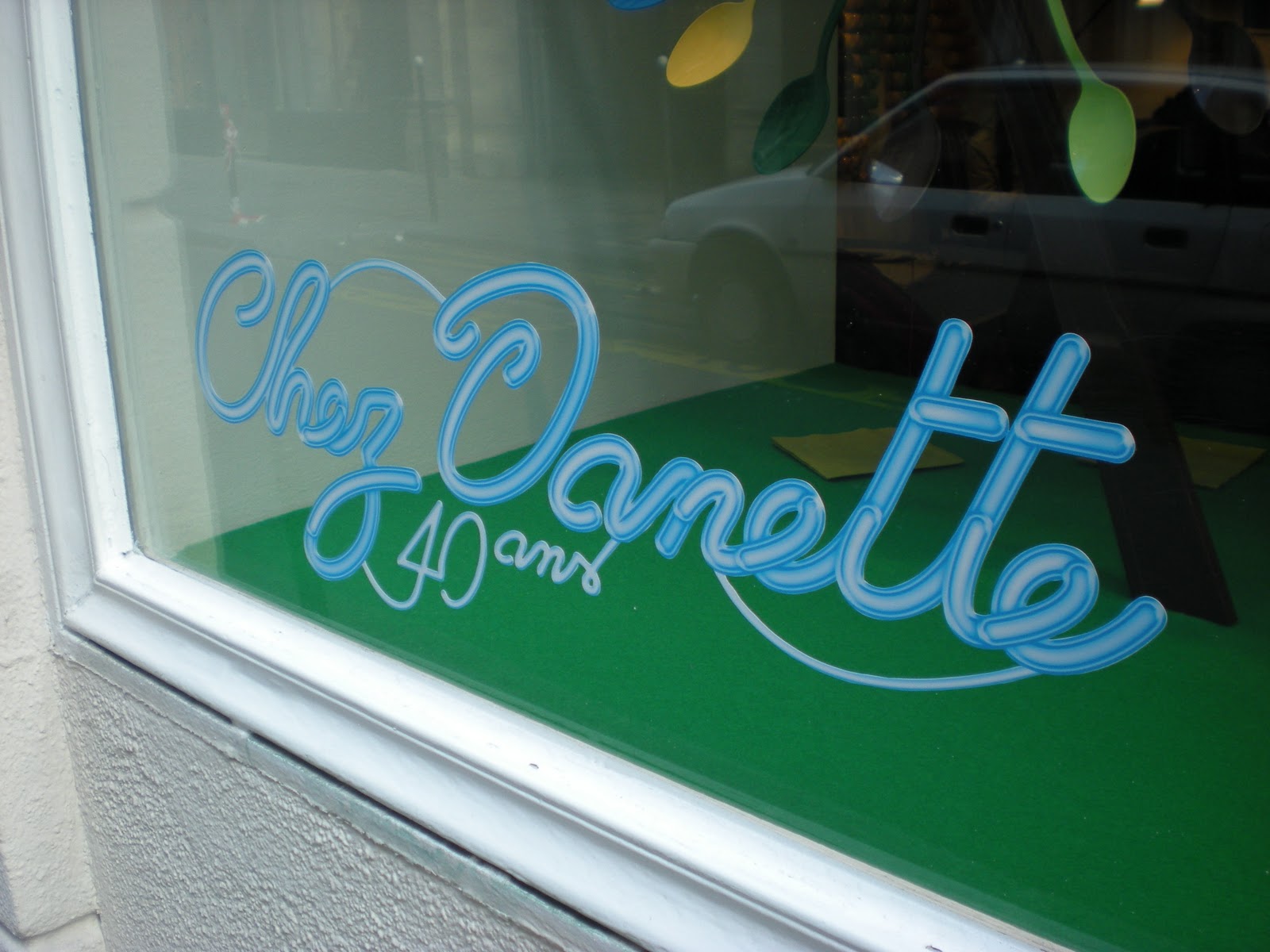
Danette: A National Dessert


Step into a French grocery store, big or small, and walk towards the yogurt and refrigerated dessert aisle.

What you'll notice first is the stunning variety of products, similar to the cereal aisle in the United States yet so different from the yogurt selection you would find there. In France, yogurt and crème dessert are found in nearly every family's fridge.

Look back at the aisle in the grocery store. There will be a large section devoted to colorful packs of four individual dessert puddings: Danettes.

A quick YouTube search of "Danette" will show you just how impactful their advertising, with the popular slogan "On se lève tous pour Danette" ("Everybody rises for Danette"), has been throughout the years. First introduced in 1970, you can now find fifteen flavors at any given time. They range from the classic vanilla or chocolate, to the more daring extra dark chocolate, vanilla-caramel, or pistachio. Watch out, though: don't get these confused with Jell-O pudding. Danettes are primarily made with whole milk and have a true creamy taste that you don't find in any other industrial dessert.


Peek into the fridge of any French pudding aficionado--whether they're 10 or 100 years old--and there's a good chance you'll find a tub of Danette. My personal preference is the extra dark chocolate, but give me any other flavor and I'll be more than happy to devour it.

Since Danette was created in 1970, exactly forty years ago, they decided to celebrate with a bang. A beang, meaning a huge Danette free-for-all in the heart of Paris. For a week in mid-September, you could walk right into the Danette "pop-up store" in the first arrondissement and have your pick of one of the fifteen flavors, with an array of crunchy toppings: coconut, crispy chocolate cereal, you name it. Once you grabbed your Danette, you could head over to the baking space, where a chef demonstrated how to use Danettes in baked goods, namely chocolate tart.


Of course, the best part was going back outside with your Danette in hand. One look around you and it was pretty easy to notice that everyone was looking at you--with an extreme sensation of jealousy.

As they say, on se lève tous pour Danette. In some countries, you rise for a flag. In others, well, it's all about dessert.

Wednesday, September 15, 2010

Brioche aux Pralines


When I look back, I realize I've always gotten pretty excited over small culinary events. Sorting through pictures of when I was around eight years old, there's one that baffles me every time. I'm sitting on the front lawn, surrounded by Easter chocolates sent from France and a brand new pair of pistachio-green shoes.

Yes, pistachio-green shoes. But that's beside the point (and no, I do not still wear them, just in case you were wondering--I outgrew them). The Easter chocolates seem to have thrown me into this kind of trance: I've got such a smile on my face, you wonder if my Maman wasn't standing behind the camera, threatening to eat all my chocolate if I didn't smile enough.

Sometimes, in lieu of chocolates, another sweet treat would come in a box sent from France: les pralines. Pralines, not to be confused with what Americans call pralines, are sugar syrup-coated almonds. Conveniently, they are usually dyed pink--which only makes it better. From the outside, they look rocky and rough. A single bite, however, brings you into another dimension: the nuttiness of the almonds collides with the sweet, crunchy coating. If you are looking for an addictive snack, search no further.

The point to which I can get excited about small things in food is exactly why I decided to enter Project Food Blog hosted by Foodbuzz. My blog may be small, but I feel it really shows just how important food and cooking are to me. I like to think my love of cooking stems from all the food experiences I had as a child: meals and foods I loved created long-lasting memories, which in turn have shaped the way I cook and bake today. 

Take these pralines roses, which I can thankfully find easily now that I live in Paris. I actually have the willpower not to eat the whole bag at once--I call that maturity and growing up. Now, only half of the bag will go directly into my mouth. Better, right?


What we're interested in today, however, is where that other half is going. Sorry to break it to you, pralines, but you are going to be crushed into pieces....and incorporated into a fluffy brioche, just in time to become a French classic: la brioche aux pralines.

Don't be afraid of yeast, at least for this once, and give this brioche a try. Just in case you have a little girl running around (or a boy who enjoys pink, even better), let them into the secret world of pink baked goods. They will thank you with one of those large, crazy smiles children know how to dole out.

I know why there's no picture of me with a huge smile sitting near a brioche aux pralines, though. I'm not sure it can travel 7000 kilometers without harm. And taking the risk of only having a semi-smile on the picture, well, that just wasn't possible.

I'll just stop for a second and daydream: if I became the next food blog star (in the words of Foodbuzz!), I would use the prize money for one single thing: help teach children  and adults alike that creating wide smiles is easy. All it takes is flour, butter, and a little bit of imagination.


Brioche aux Pralines
adapted from Le Larousse des Desserts

Note: This version yields an almost cake-like crumb. Don't be surprised if the dough doesn't rise much: adding the crushed pralines beforehand will prevent the dough from filling with air. If you'd like to have the consistency of a classic brioche--pillow-soft--incorporate the pralines right before baking.

brioche dough:
5g fresh yeast
2 cups all-purpose flour
2 TB granulated sugar
1 TS salt
3 large eggs
10.5 TB unsalted butter, room temperature and cut into tablespoon-sized chunks

praline filling and coating:
3/4 cup pink pralines, coarsely chopped
1/3 cup pink pralines, crushed to a powder (optional: if you want a very fluffy, traditional brioche texture, leave this out)

Break yeast into little pieces in a large bowl. Mix with flour, sugar and salt.

Add eggs, one at a time, mixing well after each addition. When dough starts to detach from the sides of the bowl when mixed, add butter, one tablespoon at a time. Mix well until dough becomes easy to handle. If using, add crushed pralines and mix.

Place dough in another bowl, cover with plastic wrap and leave in a warm place to double in size for 3 hours.

Once dough has risen, "punch" it down to let gas particles out of the dough.  Leave in a warm place for another hour.

Roll dough in coarsely chopped pralines to coat.

Preheat oven to 350°F.

Place brioche dough in a round or loaf pan, as desired.

Bake until golden on top, approximately 40 minutes. Cool in pan for five minutes and invert onto a wire rack. Serve warm or once cooled completely.

Store brioche, wrapped in plastic wrap, for two days maximum.

Sunday, September 12, 2010

If It Works...Well, Try Another Version!


It's four in the afternoon on a cold, dreary day in France.

Children run out past the school gates, towards their mothers, fathers, siblings or nannies, and all await one single thing: le gouter. In France, the after school snack is something of a national tradition, and very rightfully so. After a long day of learning conjugations or the name of all the rivers in the country, children have built up quite an appetite. While some families choose a daily stop at the boulangerie for a warm pain au chocolat--bakeries time the availability of warm pastries according to when school ends--others opt for a snack at home.

The afternoon snack is an important moment of the day: students around the country mellow down, have a seat, and chat about their day. It's a great opportunity to talk about what went well or what went wrong, and why. Sitting at the kitchen counter, a mug of hot chocolate between my cold hands, I cherished the conversations I had with my Maman during my four o' clock snack.

Besides the ubiquitous pain au chocolat, another after school staple is the madeleine. Its shape--shell-like, golden, with a beautiful bump in the center--makes it attractive from the first look. Next comes smell: warm butter, a slight citrus aroma. Irresistible, if you ask me. 
Held between the index finger and thumb, it is moist yet holds its shape. After the first bite, it becomes nearly impossible to put down. You can only hope that there are more where that came from, because stopping after only one madeleine is like refusing a free pair of diamond studs. Wait, where did I even get that idea? My ears aren't even pierced, so actually I could, in theory, refuse a free pair of studs. Never mind, then.

Few treats compare to a madeleine when the subject of afters chool culinary joy is evoked. One of those treats might just be chocolate mousse. For many Americans, chocolate mousse is a fancy dessert, beloved by French-inspiration restaurants. In France, however, mousse au chocolat is just the opposite: a simple dessert eaten straight out of a large bowl or slathered onto a thick slice of fresh buttery brioche.

If you put two and two together, an amazing after school snack comes to life: madeleines dipped...in chocolate mousse. Although I have a classic, easy-yet-delicious recipe for each, I couldn't resist trying out something new. Juste pour voir. 


The end result? Rich madeleines infused with lemon aroma, fluffy like a dense, brand-new pillow. A silky chocolate mousse, delicate yet with a powerful chocolate taste. Together, they form a tasty duo: complementary flavors, complementary textures--something you might want to try for your next after school snack.

Oh, one more thing: I had my after school snack at ten at night. Does anyone ever tell you, when you're eight years old, that school won't end at four forever? 


Madeleines
makes 12 

zest of 1 untreated lemon
80g / 1/3 c. + 1.5 TB granulated sugar
85g / 3/4 c. + 1.5 TB  all-purpose flour
10g / 1 scant TB baking powder
80g / 5.5 TB unsalted butter, melted
2 eggs
15g / 2TS honey

Make batter the day before baking.

Combine granulated sugar and lemon zest in a large bowl. Rub together to release lemon oils from zest. In another bowl, sift flour and baking powder togather.

Add eggs and honey to bowl, beat until foamy. Gently incorporate flour mixture. Add melted butter and stir. Do not overmix. Refrigerate batter overnight or at least 12 hours in a closed container.

When ready to bake, preheat oven to 400°F/200°C.
Butter and flour a madeleine pan if using metal. Fill each hole 3/4 up.

Bake 8 to 10 minutes until golden. Let cool in pan five minutes and invert onto a wire rack.

Serve immediately or store in an airtight container.


Chocolate Mousse
serves 4 to 6

180g / 1 c. / 6.5 oz. semisweet or bittersweet chocolate, chopped
1 TB whole milk
10cl / 1/3 c. + 1.5 TB whipping cream
10g / 3/4 TB unsalted butter, room temperature and cut into pieces
3 eggs, separated
1 TB granulated sugar

Place chopped chocolate in a large bowl.

Bring milk and cream to a boil in a saucepan. Pour over chocolate and whisk for one to two minutes until mixture cools down to 100°F/ 40°C. Whisk in butter.

Beat egg whites with sugar to stiff peaks. Add egg yolks a few seconds before you stop the beaters.

Incorporate one fifth of egg mixture into chocolate ganache and mix. Pour back into the remaining egg whites, and incorporate delicately until combined.

Refrigerate until serving, but no longer than 24 hours.