Showing posts with label france. Show all posts

Saturday, October 2, 2010

Danette: A National Dessert


Step into a French grocery store, big or small, and walk towards the yogurt and refrigerated dessert aisle.

What you'll notice first is the stunning variety of products, similar to the cereal aisle in the United States yet so different from the yogurt selection you would find there. In France, yogurt and crème dessert are found in nearly every family's fridge.

Look back at the aisle in the grocery store. There will be a large section devoted to colorful packs of four individual dessert puddings: Danettes.

A quick YouTube search of "Danette" will show you just how impactful their advertising, with the popular slogan "On se lève tous pour Danette" ("Everybody rises for Danette"), has been throughout the years. First introduced in 1970, you can now find fifteen flavors at any given time. They range from the classic vanilla or chocolate, to the more daring extra dark chocolate, vanilla-caramel, or pistachio. Watch out, though: don't get these confused with Jell-O pudding. Danettes are primarily made with whole milk and have a true creamy taste that you don't find in any other industrial dessert.

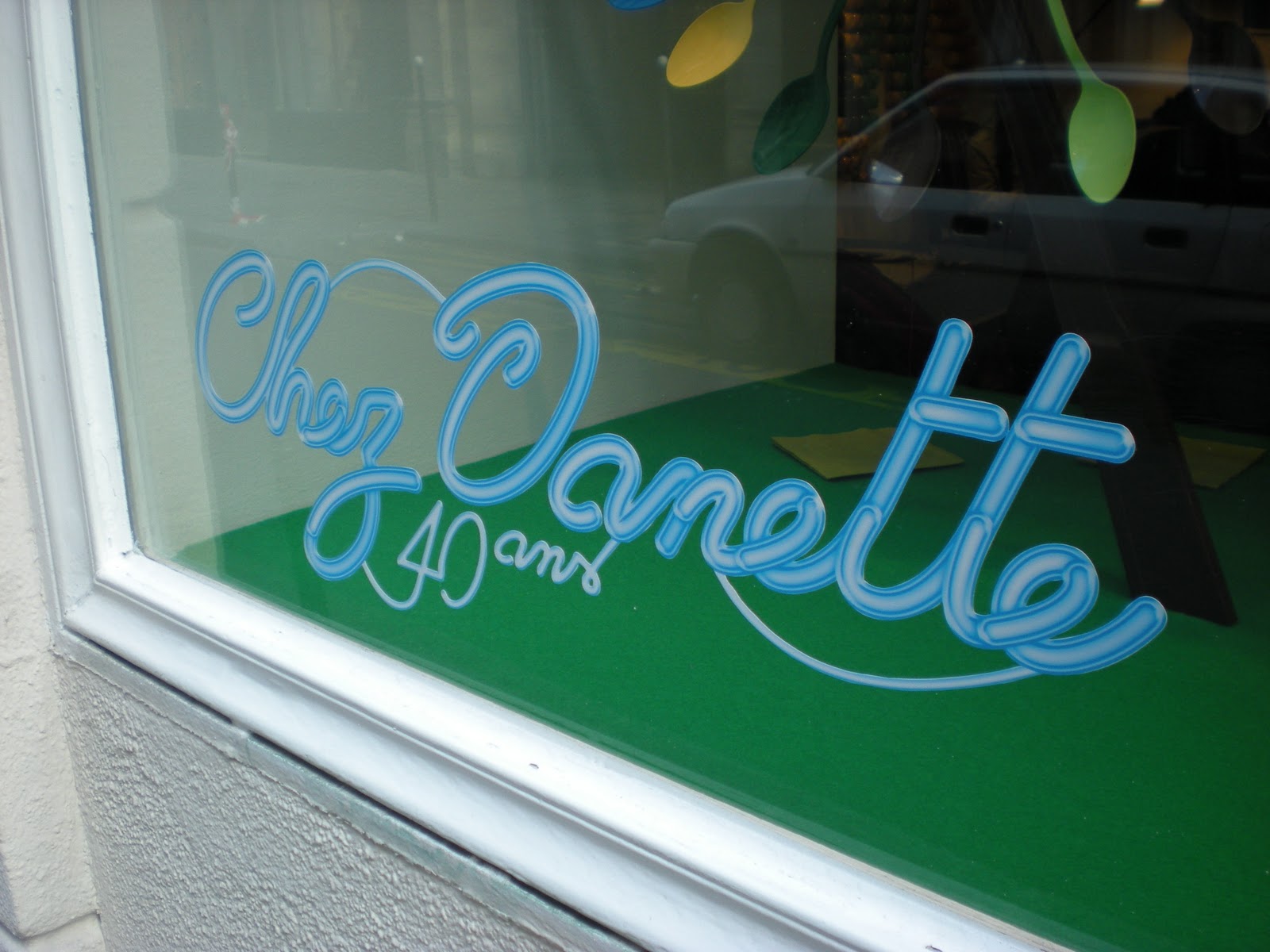
Peek into the fridge of any French pudding aficionado--whether they're 10 or 100 years old--and there's a good chance you'll find a tub of Danette. My personal preference is the extra dark chocolate, but give me any other flavor and I'll be more than happy to devour it.

Since Danette was created in 1970, exactly forty years ago, they decided to celebrate with a bang. A beang, meaning a huge Danette free-for-all in the heart of Paris. For a week in mid-September, you could walk right into the Danette "pop-up store" in the first arrondissement and have your pick of one of the fifteen flavors, with an array of crunchy toppings: coconut, crispy chocolate cereal, you name it. Once you grabbed your Danette, you could head over to the baking space, where a chef demonstrated how to use Danettes in baked goods, namely chocolate tart.


Of course, the best part was going back outside with your Danette in hand. One look around you and it was pretty easy to notice that everyone was looking at you--with an extreme sensation of jealousy.

As they say, on se lève tous pour Danette. In some countries, you rise for a flag. In others, well, it's all about dessert.

Monday, August 9, 2010

A Summer Weekend in the Vosges, and Fluffly Financiers


When my train rolls into the small town of Saint-Dié, in the Eastern Vosges region of France, my eyes automatically drift to the mountaintops.

Cue Sound of Music-type background tune. Wait, maybe not--it depends on the weather.

See, the Vosges region is generally one of the most beautiful regions out there. During the winter, it gets covered in snow and the pines glisten under the sunlight. When summertime rolls around and it gets warm, the mountains seem to be part of a lansdcape painting. These are the times when you could easily hear birds chirping and music from Heidi spring forth behind you. And then, there are the rainy days. On those days, when my train arrives at the station, I look at the mountains and think: "Gah. Not again. Cold and dreary...but cold and dreary means hot chocolate and viennoiseries! Sounds good!"

So, I guess you could have the background music all the time.


Last weekend was a perfect sun-filled "don't you wish you could stay here all year long" weekend, at least until Sunday noon rolled around--but that is beside the point. Saturday was a day Vosges-vacation dreams are made of: hiking in the mountains, picnicking by the lake, and picking wild myrtilles, or tiny forest blueberries.

(If my aunt Mimi were to read this, she would remind me yet again that I shouldn't pick those because you never know what came near it. I'm ready to take that risk.)


And because a perfect weekend is never really perfect without baking a little, there was a large family lunch planned for Sunday noon, before I returned to Paris. This was the perfect occasion to try a recipe from a new cookbook my Maman brought back to Paris, Ladurée's Sucré. Although the pastry 'maison' may be known for its macarons or rose-flavored pastries, I decided to try out a classic: the financier.

You may remember my post about Visitandine: well, the financier is its non-identical twin. They share pretty much everything except their shape, and the fact that butter is not simply melted for a financier, but browned. Browning the butter releases a great aroma--you'll know you've gone too far when that aroma starts being anything less than great.

I wasn't pleased with the tops of my financiers, which weren't smooth enough in my opinion. A generous coating of melted white chocolate was just what I needed to feel better about them. As it turns out, the taste was what could be expected from a Ladurée recipe--amazing. The financiers were fluffy, moist, and filled with a rich almond flavor. The white chocolate added a little something, although they really would have been great on their own.


And here's a bonus: see those flowers on the close-up shot of the financiers? They are called capucines, and make a delightful snack, reminiscent of peppery mint. Visions of eating flowers all day long, sitting on a lounge chair, quickly surfaced. So did my train ticket, and I was off to Paris--with a large tote full of fruits, vegetables, and herbs from the garden.

The hills are alive with the sound of music...


Financiers
adapted from Ladurée's Sucré
makes 15 large to 30 small, depending on pan size

95 grams / 6.5 TB unsalted butter
65 grams / 3/4 c. ground almonds
195 grams / 1.5 cups confectioner's sugar
70 grams / 1/2 c. + 3 TB all-purpose flour
2 pinches baking powder ( approximately 1 1/2 TS)
6 egg whites
1 TS vanilla extract

White chocolate, melted (optional)

Melt butter in a saucepan over medium heat until lightly browned--make sure it does not burn. Remove from heat and place directly in a shallow baking dish filled with cold water to stop any browning of the butter. Let cool.

In a large bowl, mix sugar, flour, and almond flour together. Add vanilla extract, baking powder, and stir to combine. Add egg whites one by one and gently whisk together. Finally, add cooled butter and stir until you obtain a uniform batter.

Refrigerate at least 12 hours or overnight.

When you are ready to bake the financiers, preheat oven to 410°F / 210°C. Pour batter into buttered and floured financier pan, 3/4 full. If you don't have a financier pan, don't fret--a muffin pan will do the job, though in this case you may want to fill it only halfway.

Bake 8 to 10 minutes, until golden. Invert onto a rack to cool.

Once cooled, you may dip the financiers into melted white chocolate to coat. Place on a cooling rack and let dry.

Saturday, July 31, 2010

This Gougère is no Goujat


French vocabulary can get a little tricky.

When is a "g" pronounced like a "j"? When do you pronounce a "t" or "d" at the end of a word? If you're French, chances are you learned all that in school, or never even asked yourself these questions. If you're not French, well, the intricacies of spelling in the "language of love" may seem a little unclear at times.

Here's my tip: if you're having a cocktail or dinner party with people likely to be swayed by great French skills, fake it. The best way to do so? Make them gougères.

Gougères are the masculine, savory version of the extra-cute chouquettes. But as I said in the title, gougères are no goujat. A goujat is a man who acts in a rude manner, especially towards women. This gougère right here does no such thing--trust me. It is small, cute in its own way, and just bite-sized enough to make everyone feel good about having one. But here is the magical side: you can put everything and pretty much anything in or on a gougère. Traditionally, gruyère gets first dibs on topping rights, but feel free to switch things around every now and then.

Last time I had friends over, gougères were the perfect accompaniement to my favorite goat cheese-green fig mix. Feel free to go anywhere with the base recipe for gougères: add some truffle oil, top with poppy seeds or sesame...or stuff them with what you'd like, from an umami-packed tapenade to tomato whipped cream.


Really, girlfriend, this gougère knows his way to a woman's heart. Next time someone quizzes you on some tricky French, stick a gougère in their mouth. They'll shush up and love you for it.


Gougères
makes approx 40 small puffs

1 cup water
1/3 cup (80g) butter
1 1/4 cup (125g) flour
4 eggs
salt
Optional toppings: gruyère, poppy seeds, sesame seeds...
Optional fillings: goat cheese, tapenade,...

Preheat oven to 200°C / 400°F.

Bring water to a boil, add salt, then add butter.

Once the butter has melted, add all the flour at once and stir until you get a dry dough.

Remove the saucepan from heat, and add eggs one at a time, stirring (your arms might hurt a little) until you end up with a nice dough that's not too liquid.

Pipe dough onto a baking sheet, making little pyramids/cones for each. Sprinkle with topping, if using.
 
Bake until golden (approx. 20 minutes), opening oven door as little as possible. Let cool on a rack. Slice gougères open to pipe filling inside.


Monday, September 29, 2008

Birthday Kouign Amann

My sister's birthday isn't until Wednesday, but she was spending the weekend in France and I really wanted her to have a full homemade birthday dinner before leaving.

Herb-crusted salmon with baby spinach salad was the main course (thanks, Martha Stewart) and I have to admit it was really good.

For dessert, I wanted to make something my sister liked (because, you know, that's what birthday cakes are for), and she doesn't like cooked fruit mixed with dairy products. Once that was out of the picture, I also ruled out anything too heavy or cream-filled.

In the end, I settled on a dessert I know she likes: a kouign amann. It's a specialty from Brittany, and is a caramelized cake filled with salted butter and sugar. Well, normally.

I didn't take any pictures of my two individual kouign amann because they weren't what I had hoped--I can't really speak of caramelized anything. After blowing out her birthday candles, my sister assured me that even if it didn't taste like a kouign amann, it was a pretty tasty crystallized brioche.

If you want to give the kouign amann a go, because it's a delicious dessert when you get it right, there are a few sites you can visit:


Some would say that you can only find a real kouign amann in a tiny hidden patisserie in a tiny hidden village on the west coast, but I honestly doubt that.

Good Luck!


Wednesday, July 9, 2008

Pretty Little Mango Pearls


Last Saturday, I discovered a cute little place called Le Labo, where artists and scientists meet. The result is unconventional exhibits: until the end of July, the Labo is hosting a Thierry Marx / Jérôme Bibette exhibit, where cooking meets science.

Thierry Marx is a world-renowned chef, famous for his "cuisine moléculaire". Jérôme Bibette, on the other hand, is a famous chemist. The exhibit is based on this new way of cooking, where chefs attempt to discover original food forms without modifying the taste of their dishes.

The exhibit was made up of a small machine that creates "food pearls", video art by Mathilde de l'Ecotais, and design propositions for a new take on bento boxes.

The main part of this sensorial exhibit, though, was the food-tasting. I had gotten a reservation for two for the "Degustation Gourmande": Grapefruit mousse, Mango pearls, and a citrus pudding. I had always wanted to try something invented by Thierry Marx, and was really expecting a totally different culinary experience. 
After having a glass of champagne, we got our little bento box-inspired tray, "filled" with our snack. 


Overall, the food was good, but we both agreed that there wasn't anything crazy about it.
The grapefruit mousse was alright, but what's so special about a grapefruit mousse?
The mango pearls were funny to eat, and knowing they were made with the cool machine changed everything. I guess that was the best part.
The citrus pudding with a berry gelée was really good, I'll admit that. But... it was just a pudding! Molecular cuisine?!? 


The funny part came after that. I had read so much online about the Whif, this apparently great invention that allows you to inhale chocolate through an aerosol. We were--once again--expecting craziness, a futuristic system resembling some kind of oxygen machine, but got nothing like it.

When you were little (or even now), did you ever make yourself toast with butter and cocoa powder on top? If you did, you probably remember inhaling while you bit into your toast, and getting a bunch of cocoa powder down your throat. Not so fun!
Well, the Whif was exactly like doing this, without the good taste of bread and butter. You're supposed to smoke it like a cigar, but this whole fake-seeming invention just felt useless.

My final thought about Le Labo? It's a great place, and the idea behind it is truly wonderful. Making it possible for artists and scientists to interact is a terrific idea, I just wish this particular exhibit had been a tad more surprising.

The next day, I went to the Valentino exhibit--no food, but that was a truly delectable experience.

Wednesday, July 2, 2008

Baking and (Sun)burning


If you've ever been to France and never to the Vosges region, you're missing something.

Quiet, peaceful, and oxygen-filled : everything Paris is not. My short weekend in Saint-Dié-des-Vosges, small town in the Eastern part of France gave me the opportunity to learn a new cake recipe. As well as getting huge accidental sunburns and eating a lot of groseilles and raspberries, because the garden was full of them:


Apart from visiting my aunt Mimi, which was obviously the main purpose of my going to St Dié, I decided to bake a kougelhof.

"A what??"

A kougelhof is an Alsatian cake, baked in a huge bundt pan. It's moist and simple, with just a few raisins and almonds. The recipe my aunt has been using forever comes from a local baker and has been getting compliments from ever since I can remember.

That's why, on Sunday morning--we were having a family lunch--I decided to try out a kougelhof. What could go wrong with a trusted recipe before my eyes? 

The only problem was, I'm not quite the type to read recipes carefully. So when I see "mix yeast in warm milk" and "add butter to the rest of the milk", the word "rest" sort of sneaks away... 
So the butter went into the yeast + milk, and I only realized this when it was too late--everything was already in the mixer bowl, ready to become a delicious kougelhof dough.

I stayed optimistic, and while we put the cake in the oven at 100°C for an hour to let it rise instead of outside in the sun for 6 hours like you're supposed to (I hadn't gotten up early enough for this part), I was sure the dough would rise.

It did, to some extent. So then began the cooking, and the end result was actually quite nice. Sure, it was a bit drier and definitely more dense than a traditional kougelhof, but it still had that sweet yeasty distinctive taste. Plus, it was still pretty to look at:


Here's the recipe, which I promise turns out perfect if your read it right!

Kougelhof - prep time 40 mins, 6 hours before final baking

Ingredients (in metric this time)

500g flour
250 mL milk
125g butter
20g yeast
2 eggs
125g sugar
100g raisins
100g slivered almonds
salt
powdered sugar

- Melt the yeast in 2 tablespoons warm milk, and make sure the milk stays warm.

- Melt butter in remaining milk in a double boiler.

- Mix flour, salt, sugar, and add eggs. Add milk/butter mixture little by little. Finally, add yeast and raisins.

- Butter the sides of a 1,5L bundt pan, and cover inside of the pan with slivered almonds. Pour in dough, and cover with a clean dishtowel. Keep in a warm place until the dough reaches the top of the pan and overflows a bit, about 6 hours.

-Place in oven at about 325°F / 160°C for 40 minutes, until a knife inserted into the cake comes out clean.

- Dust with powdered sugar and serve.


Voila!

Tuesday, June 17, 2008

About Bilingual Butter

As a young girl growing up in Illinois with a French maman, I was always surrounded by a variety of culinary influences. The women on both sides of my family, French and American, are true supercooks: my American grandmother was the queen of "sticky buns" and other breakfast delicacies, while my mother has always left me under the impression that she can master anything. French cooking, obviously, but also a delicious gumbo or Thai salad...anything, really.

Now that I'm 21 and living on my own in Paris, things are getting a little more complicated. Cooking as well as my family probably won't ever happen, but I'm trying. And this blog is exactly about that: experimenting and discovering that the culinary obsession hasn't skipped a generation...

So welcome to Bilingual Butter, a place where I'll try to share my favorite food spots in Paris and my successful--and not so successful--cuisine adventures. Enjoy!